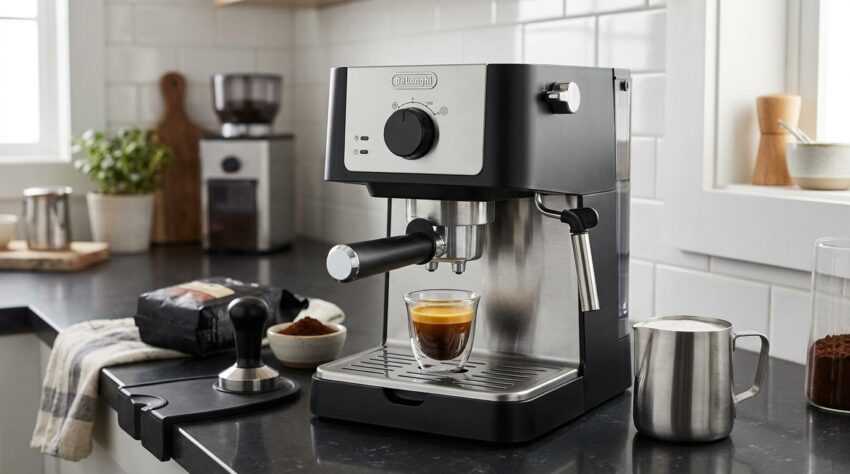
For many people, espresso at home starts with a simple question: how much control do I want, and how much effort am I willing to put in? Manual espresso machines answer that question by leaving most of the decisions to the person making the drink. The De’Longhi Stilosa Compact Manual Espresso Machine is designed for people who want to learn that process in a compact package. This article explains the machine’s main features, the ways it can be used, the kinds of people it may suit, and the practical points to consider before deciding whether it fits your kitchen and routine.
What a Manual Espresso Machine Involves
A manual, or semi-automatic, espresso machine uses a pump to push hot water through finely ground coffee packed into a filter basket. Unlike fully automatic machines, which grind, dose, and stop the shot for you, manual machines rely on the user for several steps. You measure and grind the coffee, pack it into the portafilter, tamp it level, lock the portafilter into place, and decide when to start and stop the extraction. Milk steaming is also a hands-on task.
This approach asks more of the person behind the machine, but it also offers a closer view of how espresso is made. Small changes in grind size, dose, or tamp pressure can noticeably affect the shot, and many people find that learning these variables is part of the appeal.
Overview of the Stilosa
The De’Longhi Stilosa, model EC260BK, is a compact manual machine built around a 15-bar pump, a stainless steel boiler, and a manual steam wand for frothing milk. Its listed dimensions are roughly 11.2 inches high, 8.1 inches wide, and 13.5 inches deep, with a weight of about 9.5 pounds. Those figures make it smaller than many standard espresso machines and suitable for apartments, small kitchens, and corners of an office where counter space is limited.
The machine is sold in a black finish with stainless steel accents, and the packaging typically includes the espresso machine, a portafilter, single and double filter baskets, a measuring scoop, a tamper, an instruction manual, and a quick-start guide. Some retailers also offer bundles that add a stainless steel milk pitcher or a coffee tamper. Contents can vary by seller and region, so checking the specific listing is a good idea before purchase.
Key Features
A 15-Bar Pump
The Stilosa uses a 15-bar pump, which is the pressure level listed in the product information. Many home espresso machines operate in a range from roughly 9 to 20 bar, and pressure is one factor in extraction. Espresso quality depends on the whole system, including the coffee’s freshness, grind size, dose, tamping, and water temperature. The 15-bar figure is a reasonable starting point for a compact home machine, but it is only one part of the picture.
Stainless Steel Boiler
The boiler heats the water used for brewing and steaming. The manufacturer describes the boiler as stainless steel and notes that it is built for durability. Stainless steel is a common material in espresso equipment, and it tends to hold up well over time when the machine is cleaned and descaled regularly.
Manual Steam Wand
The manual steam wand allows you to heat and froth milk for cappuccinos, lattes, and flat whites. The product materials describe the wand as producing a rich, creamy froth. Milk texture depends on several factors, including the temperature and fat content of the milk, the position of the wand in the pitcher, and the amount of practice you have. Cold milk gives you more time to work, and many people find whole milk easier to texture than skim. Barista-formulated plant-based milks can also be steamed, although results vary by product.
Portafilter and Filter Baskets
The machine uses a 51mm portafilter, a common size in home espresso equipment. The included single and double filter baskets let you brew one or two shots at a time. Because the portafilter is removable, you can clean it and the baskets separately after each session.
Removable Water Tank
The removable water tank holds about 1 liter, or roughly 33.8 fluid ounces, and includes a water level indicator. A removable tank makes refilling easier and simplifies cleaning. For a compact machine, this capacity is enough for several drinks in a session, though frequent brewers may want to refill between shots.
Removable Drip Tray and Cup Holder
The drip tray catches spills and excess water, and it can be removed for emptying and cleaning. The listings also reference a two-level cup holder, which accommodates both shorter and taller cups. This can be handy if you switch between espresso cups and larger mugs for milk drinks.
Clean Machine Indicator
Some listings describe a clean machine indicator, which signals when the machine may need cleaning or descaling. Indicators like this are helpful for reminding you to maintain the machine, though they supplement rather than replace regular cleaning.
Auto Shut-Off
Retail listings also mention an auto shut-off feature, which can help reduce energy use if the machine is left on by accident. The exact timing of this feature may vary, so it is worth reviewing the manufacturer’s documentation for your specific model.
Power and Voltage
The machine is listed at about 1100 watts and is generally described for a 110-volt supply, which corresponds to standard household voltage in the United States. If you live in an area with a different voltage, check whether the product is suitable for your supply before purchasing.
How It Can Be Used
Making Single and Double Espresso
The core function is brewing espresso. A typical process involves grinding fresh coffee to a fine consistency, dosing it into the appropriate filter basket, leveling and tamping the grounds, locking the portafilter into the group head, and starting the shot. Many users watch how the espresso flows and how long the shot takes, then adjust grind or dose for the next attempt. The process rewards patience and careful observation.
Preparing Cappuccinos and Lattes
For milk-based drinks, you brew espresso first, then steam milk with the manual wand. A cappuccino typically uses a shorter, denser layer of milk foam, while a latte uses more steamed milk with less foam. Pouring the milk into the espresso with a steady motion helps create a smooth drink, and practicing this technique can improve consistency over time.
Making Flat Whites and Macchiatos
Flat whites use a smaller amount of velvety, lightly textured milk than a latte, while macchiatos are espresso with a small dollop of foam. Both drinks are good practice exercises for learning milk texture and pouring.
Brewing for Family or Guests
The compact design makes the Stilosa a practical choice for a home coffee corner, where it can serve a household or a small group of guests. Preparing drinks in sequence takes time, so planning the order and having milk, cups, and sweeteners ready in advance can make the process smoother.
Building a Morning Routine
Some people enjoy a manual machine as part of a morning ritual. Grinding, dosing, brewing, and steaming can take several minutes, which some find relaxing and others find too involved for busy mornings. Deciding how much time you want to spend is a useful first step.
Who It May Be Suitable For
This type of machine tends to suit a few groups particularly well.
People who are new to espresso and want to learn the fundamentals may find the Stilosa a useful starting point. Its manual controls reveal how grind, dose, and milk technique shape the final drink.
Households and offices with limited space may value the compact footprint. The machine fits on many countertops and can sit beside a grinder and a few accessories.
Those who enjoy milk-based drinks and want to make them without buying a separate frother may find the built-in manual wand convenient.
Users who prefer ground coffee over pods may appreciate the control over bean choice, roast level, and grind size.
If you want a machine that does most of the work for you, or you need to serve many drinks quickly, a fully automatic or commercial machine may be a better match.
Important Things to Consider
The Learning Curve
Manual espresso takes practice. Early shots may run too fast, run too slow, or taste sour or bitter. Milk may not texture the way you want. These outcomes are normal for beginners. Keeping notes on grind setting, dose, and timing can help you identify what to change between attempts.
A Grinder Is Important
Espresso requires a fine, consistent grind, and blade grinders generally cannot deliver the uniformity needed for good extraction. Most people using a manual machine pair it with a burr grinder. Including a grinder in your budget and planning is wise, since the grinder often has as much influence on flavor as the machine itself.
Single-Boiler Limitations
The Stilosa uses a single boiler, which means it cannot brew espresso and steam milk at the same time. The machine must change temperature between the two tasks. For a single drink, this is rarely a problem, but if you plan to make several milk drinks back to back, you will need to allow time for the machine to switch modes. Waiting for the “ready” light before steaming is part of the routine.
Milk Steaming Technique
Cleaning the steam wand after each use is important. Milk residue can dry on the wand and affect both hygiene and performance. Briefly releasing steam before and after frothing, as described in the manufacturer’s instructions, helps keep the wand clear.
Freshness of Coffee
Freshly roasted coffee generally performs better than stale coffee. Checking roast dates, buying smaller quantities, and storing beans in an airtight container away from heat and light can make a noticeable difference.
Maintenance and Descaling
Water hardness affects the boiler and internal components over time. Using filtered or softened water can reduce mineral buildup. The manufacturer’s guidelines include recommended cleaning and descaling intervals, and following them helps the machine last longer.
Counter Space and Ventilation
Even a compact machine needs room for the portafilter, cups, grinder, and tamper. Allow space around the machine for airflow, since steam is produced during milk frothing and brewing.
Warranty and Support
Warranty coverage varies by retailer and region. One listing references a one-year warranty, but terms can differ. Review the warranty details on the product page and keep your proof of purchase.
Realistic Expectations
Home espresso can be rewarding, but it will not always match the output of a specialty café. Café machines are often commercial-grade, and baristas bring training and experience. Treating home brewing as a skill that develops over time tends to lead to a more enjoyable experience.
Comparing General Categories of Espresso Machines
When choosing an espresso setup, comparing broad categories often helps more than comparing individual models.
Pod and capsule machines are the simplest option. They deliver consistent results with minimal preparation, but they limit control over flavor and can cost more per cup. Some people also consider the environmental impact of single-use capsules.
Fully automatic machines grind, dose, brew, and often steam milk with a button press. They prioritize convenience and repeatability, but they usually cost more and offer less hands-on learning.
Semi-automatic and manual machines, including the Stilosa, give the user control over the key variables while handling water and pressure delivery. They are a common choice for people who want to develop their skills at home.
Lever machines require the user to generate pressure by hand. They offer a high degree of control and a strong connection to the process, though they demand more physical effort and experience.
Commercial machines are built for high-volume environments. They are durable and powerful, but they are larger, more expensive, and generally unnecessary for home use.
For many home users, a compact manual machine strikes a practical balance between control, footprint, and learning value.
Frequently Asked Questions
Does this machine include a grinder?
No. The Stilosa is designed to brew with ground coffee, so you will need a separate grinder, ideally a burr grinder, for the best results.
Can I use pre-ground coffee?
Yes, though freshly ground coffee generally produces better flavor and crema. If you use pre-ground coffee, choose one labeled for espresso and check the roast date.
Can I make espresso and steam milk at the same time?
No. The machine uses a single boiler, so it must switch between brewing and steaming. Plan your drinks with that in mind.
Does it work with plant-based milk?
Many plant-based milks can be steamed, though results vary. Barista-formulated versions are often recommended for foaming. The manufacturer’s instructions note that both dairy and non-dairy milk can be used.
How big is the water tank?
The removable tank holds about 1 liter, or roughly 33.8 fluid ounces, and includes a water level indicator.
Does it turn off automatically?
Some listings describe an auto shut-off feature. Confirm the details in the manufacturer’s documentation for your specific model.
How long does it take to learn?
Most people become comfortable with the basics within a few weeks of regular practice. Consistency in grinding, dosing, and milk texture usually improves gradually.
Is it suitable for a small office?
The compact footprint makes it workable for a small office or shared kitchen. Consider cleaning routines, noise from steaming, and how it fits into shared workspace habits.
What should I clean regularly?
Wipe the steam wand after each use, empty and rinse the drip tray, clean the portafilter and filter baskets, and follow the manufacturer’s guidance for descaling.
Conclusion
The De’Longhi Stilosa Compact Manual Espresso Machine offers a compact, hands-on way to make espresso and milk-based drinks at home. Its 15-bar pump, manual steam wand, removable tank, and compact dimensions make it a practical option for people who want to learn the craft of espresso without giving up much counter space. Like any manual machine, it rewards practice and attention, and its results depend on your coffee, grinder, and technique. Reviewing the specifications, confirming what is included, and thinking about your daily routine can help you decide whether this machine suits your needs.