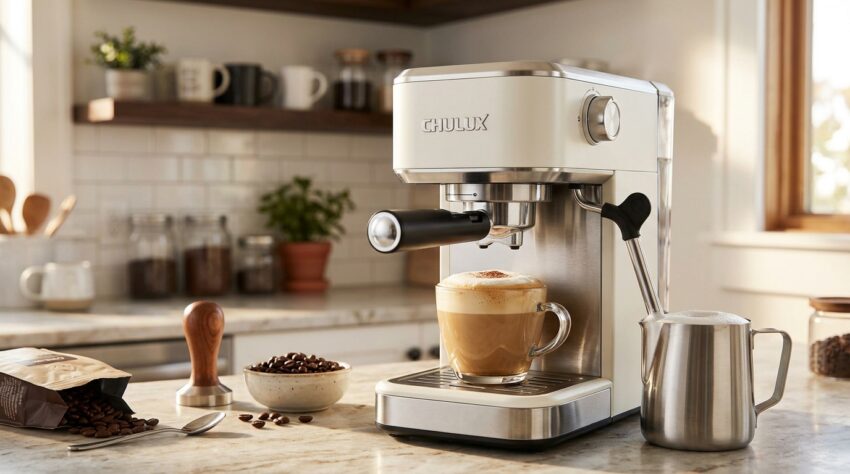
Making espresso drinks at home has become far more approachable over the past decade. Many people who once relied on café visits now want to learn the basics of extraction, milk steaming, and drink building in their own kitchens. Compact espresso machines have made that goal more realistic, especially for households with limited counter space. The CHULUX Slim Espresso Machine with Milk Frother is one of several compact semi-automatic models designed for that purpose. This guide explains what the machine is, how its features work, how people commonly use it, who it may suit, and what to think about before deciding whether it fits your routine.
What This Type of Machine Is
Before looking at the CHULUX model specifically, it helps to understand the category. A semi-automatic espresso machine uses a pump to push hot water through a compacted puck of finely ground coffee held in a metal filter basket. The user controls the grind, the dose, the tamping, and when to stop the shot. This differs from fully automatic machines, which handle grinding and extraction with the press of a button, and from pod machines, which rely on pre-packaged capsules.
Semi-automatic machines ask more of the person using them. They reward attention to detail, and they reveal the effects of small changes such as grind size or tamp pressure. For some people, that hands-on involvement is the main appeal. For others, it can feel like a learning curve. Knowing which group you belong to will shape how useful any machine in this category is for you.
Overview of the CHULUX Slim Model
The CHULUX Slim Espresso Machine with Milk Frother is a semi-automatic model with a stainless steel body and a slim profile. According to the product listings, its width is about 5.5 inches, and its depth and height are roughly 11.7 inches and 12.5 inches. Those measurements make it narrow enough for many countertops, though you should measure the actual space where it would sit, including room for cups, a grinder, and enough clearance to open any lids or drip trays.
The machine is sold in several finishes, and the listings reference colors and styles including brushed stainless steel and other shades. The included accessories, as listed by the manufacturer and retailers, typically include a portafilter, filter baskets for single and double shots, a combined spoon and tamper, and a user manual. Accessory sets can vary slightly by listing and region, so confirming the exact contents on the product page before purchase is a sensible step.
Key Features
A 20-Bar Pump
The machine is described as using a 20-bar Italian pump. Pump pressure is a common point of interest in espresso equipment, and 20 bar is a figure frequently cited for home espresso machines. The manufacturer states that this pressure supports extraction of strong-flavored espresso with a layer of crema. Crema is the golden foam that sits on top of a well-pulled shot, and its appearance depends on many factors beyond pump pressure, including coffee freshness, grind, roast, and water temperature. A pressure figure alone does not guarantee a particular result, so it is best understood as one part of a larger system.
A Pressure Gauge
Listings mention a pressure gauge that displays extraction pressure in real time. Gauges can be useful for learning, because they show whether the pump is reaching a steady level during a shot. Beginners often use gauges to get a sense of how grind size affects flow. Experienced users sometimes find them helpful for diagnosing problems, such as shots that run too quickly or stall entirely. Whether a gauge matters much to you depends on how closely you want to track your process.
Pre-Infusion
Some listings describe a pre-infusion function, which wets the coffee puck gently before full pressure is applied. The purpose of pre-infusion is to help the coffee expand evenly and reduce the chance of channeling, where water finds a shortcut through the puck. Pre-infusion is a feature many home users look for, though its effect varies with the coffee and technique involved.
Steam Wand for Milk
The built-in steam wand is the feature that gives this model its milk-frothing capability. A steam wand injects pressurized steam into milk, heating it and introducing air to create microfoam. The product materials describe the wand as capable of producing creamy foam suitable for lattes, cappuccinos, and similar drinks. Milk texturing is a skill, and results depend heavily on the milk, the pitcher, the wand position, and practice. Many people find that whole milk or milk with a higher fat content is easier to texture, although plant-based milks can also be steamed, typically with versions formulated for foaming.
Boiler and Heat-Up Time
Manufacturer descriptions reference a 1350-watt boiler and a heat-up time of about 30 seconds before brewing. Heat-up figures can be useful for comparing machines, but they are typically measured under specific conditions, and actual times depend on your kitchen, your water temperature, and how the machine has been used. Treat these numbers as the manufacturer’s stated figures rather than guaranteed performance.
Water Tank and Drip Tray
The listed water tank capacity is 40 ounces, which is generous for a compact machine. A larger tank means fewer refills during a morning of drinks for two or three people. The removable drip tray is designed to catch spills and excess water, and it should be emptied and cleaned regularly to avoid odors and buildup.
Auto Shut-Off
Some listings mention an automatic shut-off feature, with one referencing a 25-minute interval. Auto shut-off can reduce energy use and add a layer of safety when the machine is left on by accident. As with other features, check the specific model you are considering, since descriptions across listings are not always identical.
Food-Grade Materials
The manufacturer states that components that come into contact with water and coffee, including the boiler, water tank, brew head, internal silicone tubing, filter, and steam wand, are made from food-safe materials. Reading material claims carefully is always worthwhile. If you have specific material requirements, the manufacturer’s documentation or product page is the right place to verify them.
Portafilter and Filter Options
The portafilter holds the coffee for extraction. The listings reference a 51mm portafilter size, which is a common dimension in home espresso equipment. Having both single and double filter baskets gives you flexibility to brew one or two shots at a time. A 51mm portafilter also means that some third-party accessories designed for that size may be compatible, though you should confirm compatibility before buying anything separately.
How It Can Be Used
Making a Simple Espresso
The most basic use is pulling a single or double shot. A typical workflow involves grinding fresh coffee to a fine consistency, dosing it into the filter basket, leveling the grounds, tamping them evenly, locking the portafilter into the group head, and starting the shot. Many people look at the time the shot takes and how the liquid flows, then adjust grind size for the next attempt. Because semi-automatic machines leave these decisions to you, they can be an excellent learning tool.
Preparing a Cappuccino
A cappuccino combines espresso with steamed milk and a thick layer of foam. To make one, pull a shot into a cup, then steam cold milk using the wand until it reaches a comfortable temperature and develops a velvety texture. Pour the milk into the espresso with a gentle motion. The balance of espresso, milk, and foam defines the drink, and practicing that balance is part of the fun.
Making a Latte
A latte uses more steamed milk and a thinner layer of foam than a cappuccino. Many people enjoy experimenting with milk texture to find the mouthfeel they like most. Flavored syrups, sugar, or cocoa can be added after the drink is assembled, depending on personal taste.
Trying Other Espresso-Based Drinks
Once you are comfortable with espresso and milk, you can explore americanos, which add hot water to a shot; flat whites, which use a smaller, more textured milk layer; and mochas, which add chocolate. Each drink teaches something slightly different about extraction and texturing.
Using It for Gatherings
Some households use a home machine when guests visit, offering a small menu of drinks. A compact model with a decent water tank can handle a handful of drinks in a session, though the pace will be slower than a café’s. Planning the order of drinks and allowing time for the machine to recover between shots can make hosting smoother.
Building a Morning Routine
Many people use an espresso machine as part of a weekday routine. The appeal lies in the ritual of grinding, brewing, and steaming, which some find more satisfying than simply pressing a button. Others prefer quicker options during busy mornings. A semi-automatic machine suits people who enjoy the process and have a few minutes to spare.
Who It May Be Suitable For
This type of machine tends to suit a few groups of people particularly well.
Home users who are new to espresso often appreciate a model that exposes the basics of extraction without the complexity of high-end professional equipment. Learning how grind size, dose, and tamping affect a shot can be rewarding over time.
People with limited counter space may value a slim design. A narrow footprint can make a difference in small kitchens, apartments, or shared workspaces.
Those who enjoy milk-based drinks and want to make them without buying a separate frother may find the integrated steam wand convenient. It can also reduce the number of appliances on the counter.
Users who prefer ground coffee over pods may appreciate the control over bean selection, roast level, and grind. Ground coffee also tends to offer more variety than pre-packaged capsules.
Households that want a machine for occasional use rather than heavy daily production may find a compact unit sufficient. If you need to serve many drinks in rapid succession, a larger or commercial-style machine would likely be a better fit.
Important Things to Consider
Learning Curve
A semi-automatic machine requires practice. Your first shots may run too fast, too slow, or taste sour or bitter. These outcomes are common and usually improve with adjustments to grind size, dose, and tamping. Patience matters, and it helps to keep notes on what you change between shots.
Grinder Quality
The quality of your espresso depends heavily on your grinder. Espresso requires a fine, consistent grind, and blade grinders generally cannot deliver the uniformity needed for good extraction. Many home users pair a semi-automatic machine with a burr grinder, which produces more consistent particles. A grinder is an additional expense that should be factored into your planning.
Coffee Freshness
Freshly roasted coffee tends to perform better in espresso than stale coffee. Checking roast dates and storing beans in an airtight container away from heat and light can help. Pre-ground coffee loses aromatic compounds more quickly, which affects both flavor and crema.
Milk Steaming Technique
Steaming milk takes practice. Cleaning the steam wand after each use is important, since residual milk can clog the tip and affect performance. The manufacturer’s guidance and common home barista practices recommend purging the wand briefly before and after steaming, then wiping it clean.
Maintenance and Descaling
Water hardness affects the internal components of any machine that heats water. Using filtered or softened water can reduce scale buildup. The manufacturer’s instructions typically describe a descaling schedule and recommended methods. Following those guidelines helps the machine last longer and keeps the flavor of your drinks clean.
Counter Space and Ventilation
Even a slim machine needs room for the portafilter, cups, grinder, and tamper. Leave space behind the machine for the water tank and check that the area has adequate airflow, especially since steam is produced during use.
Electrical Requirements
Listings indicate standard household voltage in the regions where the product is sold. Before purchasing, confirm that the voltage matches your local supply, and use a suitable outlet. If you are unsure, consult a qualified electrician.
Warranty and Support
Warranty terms and customer support vary by seller and region. Review the warranty information on the product page and keep your proof of purchase. Support availability can influence how comfortable you feel with a machine, especially for first-time owners.
Realistic Expectations
Home espresso can be rewarding, but it will not always match a specialty café’s output, which may use commercial equipment, highly trained baristas, and carefully sourced beans. Setting realistic expectations helps you enjoy the process rather than comparing every cup to the best you have tasted.
Comparing General Categories of Espresso Equipment
When choosing an espresso setup, it helps to compare broad categories rather than focusing on individual brands. Each category serves different needs, and the right choice depends on your priorities.
Pod and capsule machines are the simplest option. They require minimal preparation and produce consistent results with pre-packaged coffee. The tradeoff is less control over flavor and a higher cost per cup over time, along with the environmental questions some people weigh when considering single-use capsules.
Automatic and super-automatic machines grind, dose, brew, and sometimes steam milk at the press of a button. They offer convenience and consistency, but they usually cost more and offer less hands-on learning.
Semi-automatic machines, like the CHULUX Slim model, sit between these extremes. They give you control over the key variables while still handling pressure and water delivery. They tend to be more affordable than many fully automatic units, and they are a common choice for people who want to develop their skills.
Manual lever machines rely on the user to generate pressure by hand. They offer a high degree of control and a strong connection to the craft, but they demand more physical effort and practice.
Commercial machines are built for high volume and durability. They are generally larger, more expensive, and designed for professional environments.
Each category has strengths. A semi-automatic machine is often a practical middle ground for home users who want more involvement than a pod machine provides, without the commitment of a professional setup.
Frequently Asked Questions
Does this machine require a grinder?
Yes, for the best results. The machine is designed for ground coffee, and espresso requires a fine, consistent grind. A quality burr grinder is generally recommended, though what you choose depends on your budget and goals.
Can I use pre-ground coffee?
You can, but freshly ground coffee typically produces better flavor and crema. If you use pre-ground coffee, choose a bag labeled for espresso and check the roast date.
Is the steam wand suitable for plant-based milk?
Many plant-based milks can be steamed, though results vary by product. Oat milk and barista-formulated versions are often recommended for foaming. Check the milk manufacturer’s guidance and experiment with small amounts.
How long does it take to heat up?
The manufacturer describes a heat-up time of about 30 seconds. Actual times can vary depending on conditions, so it is wise to allow the machine to fully warm up before brewing.
Does it come with accessories?
Listings typically include a portafilter, filter baskets, a spoon and tamper, and a user manual. Confirm the exact contents on the product page, since accessory sets can differ by seller and region.
How often should I clean it?
Wipe the steam wand after every use, empty and rinse the drip tray regularly, and follow the manufacturer’s descaling schedule. Regular cleaning protects flavor and extends the life of the machine.
Is it difficult to learn?
It takes practice, but many people find the basics manageable within a few weeks of regular use. Keeping notes on grind size, dose, and timing can speed up the learning process.
Can I make drinks for more than one person at a time?
Yes, though you will need to brew shots one at a time or in sequence. The water tank’s capacity helps reduce interruptions, but the pace will be slower than a commercial setup.
Will it fit under a standard kitchen cabinet?
That depends on your cabinet height and the machine’s height, which is listed at about 12.5 inches. Measure the space carefully, including any clearance needed for the portafilter and water tank.
Conclusion
The CHULUX Slim Espresso Machine with Milk Frother offers a compact, semi-automatic option for people who want to explore espresso and milk-based drinks at home. Its slim profile, integrated steam wand, and manual controls make it a reasonable choice for learners and for those who enjoy a hands-on approach. As with any espresso equipment, its results depend on the quality of your coffee, your grinder, your technique, and your willingness to practice. Reviewing the specifications, confirming the included accessories, and considering your own routine will help you decide whether this type of machine fits your needs.