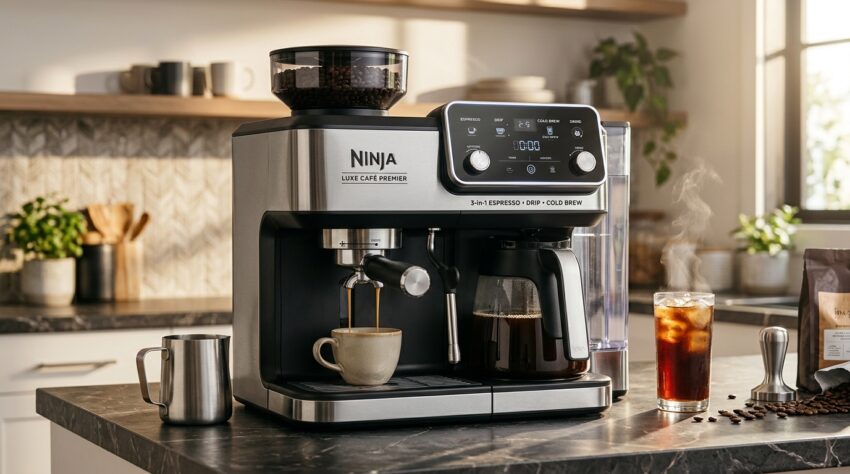
Most coffee setups grow by accident. First comes a drip maker, then a grinder because someone mentioned fresh beans, then an espresso machine bought in a burst of optimism, and eventually a jar of cold brew steeping at the back of the fridge. Each piece does its job, yet together they eat up counter space and add a surprising amount of washing up.
The Ninja Luxe Café Premier Series (model ES601) takes a different route. It places a grinder, an espresso system, drip-style brewing, cold brew options, and a milk frother inside one machine, with software that nudges you toward better results as you go. Whether that tradeoff makes sense depends on how you drink coffee, how much room you have, and how much tinkering you enjoy.
This guide walks through what the machine offers, how its features work in plain language, where it might fit into daily routines, and what deserves a second thought before committing. It is an informational overview built from the manufacturer’s published specifications and general coffee knowledge, not a hands-on report.
What This Machine Is Designed to Do
The easiest way to understand the Luxe Café Premier is as a consolidation tool. Rather than asking you to learn grinding, dosing, tamping, brewing, and frothing as separate skills, it connects them. The grinder feeds the brew system directly, a built-in scale handles dosing, and a guidance system suggests adjustments after each drink.
Ninja describes it as a “3-in-1” machine, and the three refers to espresso, drip-style coffee, and cold brew. Espresso comes as a double or quad shot. Drip-style coffee has three modes: classic, rich, and over ice. Cold brew has two: a cold brew coffee setting and a cold-pressed espresso setting. Drip and cold brew drinks can be made in several sizes, ranging from 6 ounces up to 18 ounces according to the product information.
Because the machine leans on guidance rather than manual control, it tends to appeal to people who want café-style drinks without a long apprenticeship. People who enjoy adjusting every variable by hand may find that approach less satisfying, and that distinction matters when deciding whether the machine suits you.
Key Features Explained
The Built-In Conical Burr Grinder
Coffee begins losing aroma shortly after it is ground, which is why many enthusiasts grind just before brewing. The Luxe Café Premier includes an integrated conical burr grinder with 25 grind settings. Conical burrs crush beans between two shaped surfaces, and this style generally produces more uniform particles than a blade grinder, which chops unevenly.
Twenty-five settings give a wide range. Espresso needs a fine grind, drip-style brewing needs something coarser, and cold brew sits somewhere in between depending on the method. With the grinder inside the machine, beans move straight from hopper to brew basket, which keeps loose grounds off the counter and removes one appliance from the lineup.
Barista Assist Technology
This is the feature the manufacturer places at the center of the machine. The system watches how each brew performs and then recommends a grind adjustment for the next one. If an espresso shot runs too quickly, the suggestion is generally to grind finer; if it crawls, to grind coarser.
According to the manufacturer, the machine also adjusts elements like temperature and pressure during the brew. A rough comparison would be a patient coach standing beside you. It does not replace good beans or fresh water, and it cannot promise identical results every time, but it shortens the guesswork that frustrates many beginners.
Weight-Based Dosing
Anyone who has followed a serious espresso recipe knows that weight matters more than volume. A scoop of dark roast and a scoop of light roast do not weigh the same, and even the same beans settle differently from day to day. The Luxe Café Premier includes a built-in scale so the amount of coffee entering the basket is measured rather than estimated.
Consistent dosing is one of the quiet reasons café drinks taste the same visit after visit. Having the machine handle it removes a step many home brewers skip, often simply because they do not own a separate scale.
Espresso Options and Included Tools
The machine offers two espresso styles. A double shot is the usual foundation for lattes, cappuccinos, and flat whites. A quad shot gives a more concentrated base, which can help when milk or ice would otherwise dilute the flavor.
The accessories lean toward ease of use. The set includes a portafilter, a double basket, a Luxe basket for the guided dosing approach, an assisted tamper, a funnel, and a cleaning brush. The assisted tamper is meant to help newcomers apply even pressure, which is one of those small techniques that usually takes a while to feel natural.
Drip-Style Coffee
Many all-in-one machines treat drip coffee as an afterthought, so it deserves a closer look. Instead of a conventional basket with a showerhead, this machine uses its espresso-based system to produce drip-style drinks. The three modes work roughly like this:
- Classic: a balanced cup intended for everyday drinking.
- Rich: a bolder, more intense profile.
- Over ice: a more concentrated brew designed to hold its flavor when poured over ice.
The method differs from a traditional drip machine, so the taste may differ too. Neither is automatically better. People who love a particular style of classic drip coffee may want to keep that in mind and decide how much the difference matters to them.
Cold Brew and Cold-Pressed Espresso
Traditional cold brew steeps coarse grounds in cold water for twelve hours or more. The Luxe Café Premier offers faster alternatives, using lower temperature and lower pressure so that a cold brew drink does not require overnight planning.
The cold-pressed espresso setting is a little different. Brewing espresso at a reduced temperature and a slower pace is intended to produce a smoother, less sharp result than standard espresso. That style is popular for iced lattes and for espresso-based cocktails, where harsh bitterness can overpower other ingredients.
Hands-Free Milk Frother
Frothing milk is where many home espresso setups struggle, because a steam wand takes real practice. This machine includes an automatic frothing system with four presets: steamed milk, thin froth, thick froth, and cold foam. You pour milk into the included jug, choose a preset, and let the machine do the work.
The manufacturer states that the frother works with both dairy and plant-based milks. In practice, different milks behave differently. Whole milk tends to create denser foam, while plant-based options vary by brand and type; oat and soy are often easier to work with than some others. A little experimentation usually reveals which milk gives the texture you like.
Built-In Storage
One practical detail is the storage design. The tamper and funnel can be kept on the side of the machine, and a compartment holds the brew baskets, cleaning brush, and cleaning disc. Small accessories have a way of disappearing into kitchen drawers, so having a designated place for them is a modest but useful touch.
Reservoir, Power, and Warranty
According to published listings, the removable water reservoir holds about 1.8 liters, enough for several drinks before a refill. The machine draws around 1,650 watts, which is typical for appliances that heat water quickly for espresso-level brewing. A one-year limited warranty is listed, and the box includes descaling powder and a water hardness test kit, which ties into the maintenance points covered later. Exact dimensions, colors, and included items can vary between listings, so it is worth confirming them on the current product page.
How It Can Be Used Day to Day
Quick Weekday Mornings
On a rushed morning, the appeal is a short sequence of steps. Fill the hopper, choose a style and size, and let the machine grind, dose, and brew. For a drip-style mug, there is very little handling involved.
People coming from capsule machines should note one difference: whole beans need to be stocked, and the grinder and brew path need occasional cleaning. In return, you choose your own beans rather than relying on whatever capsules are available.
Slower Weekend Drinks
Weekends are when many people have time for lattes, cappuccinos, and flat whites. Here, the grinder, scale, tamper, and frother all come into play. Pull a double shot, run the thin froth preset for a softer latte texture, or use thick froth for a cappuccino-style cap.
Anyone interested in latte art should know that automatic frothers generally produce consistent foam rather than the glossy microfoam a skilled barista creates with a steam wand. It is a convenient route to a good milk drink, not a substitute for professional technique.
Iced Drinks in Warmer Months
Iced coffee often disappoints because hot coffee poured over ice dilutes quickly. The over-ice drip setting and the cold-pressed espresso option both address that problem. Add cold foam on top, and a plain iced coffee starts to resemble the drinks sold at cafés.
Entertaining Guests
Hosting is another scenario where variety helps. One person wants a strong espresso, another prefers a large mug of drip-style coffee, and a third asks for an iced oat latte. A single machine that can handle all three requests without switching equipment is convenient in that situation, though each drink still takes its own brewing time, so serving a crowd all at once would be slow.
Experimenting With Coffee Itself
Because the machine offers grind guidance and weight-based dosing, it can also serve as a learning tool. Trying a few different beans, noticing how the recommendations change, and comparing light and dark roasts can teach a surprising amount about how coffee works, even for someone who never intends to become an enthusiast.
Who It May Be Suitable For
A machine like this tends to make sense for several types of households.
People who want variety without extra equipment. If you enjoy espresso drinks, drip-style coffee, and iced options in the same week, consolidating them into one appliance reduces clutter.
Beginners curious about espresso. The guidance features are meant to soften the learning curve. Someone who has been intimidated by manual machines may find the structured approach less daunting.
Households with mixed preferences. When one person drinks lattes and another prefers plain coffee, a multi-function machine can serve both without a second purchase.
People who value fresh grinding but dislike extra gadgets. An integrated grinder means one device instead of two.
Small kitchens that cannot hold several appliances. Although the machine itself is substantial, it replaces several separate items, which may free up room overall.
It may be less suitable for people who prefer full manual control, for those who only ever drink a single style of coffee, or for anyone with very limited counter space. Matching the machine to your routine matters more than any feature list.
Important Things to Consider
Size, Weight, and Counter Space
Combination machines are not small. A listing for the machine mentions a weight of roughly 25 pounds, and it needs room above for refilling the hopper and reservoir. Measure the space beneath your cabinets before deciding, and think about whether you are comfortable moving it for cleaning.
The Learning Curve Still Exists
Guidance features help, but espresso remains a craft with variables: bean freshness, roast level, water quality, and grind all matter. Expect a few early drinks to fall short while you learn how the machine responds. Patience tends to pay off.
Drip-Style Coffee Is Not Identical to a Traditional Brewer
As noted earlier, the drip-style modes use a different method from a classic drip machine. If conventional drip coffee is your daily favorite, it is reasonable to think about whether the taste difference will matter to you.
Cleaning and Descaling
Any machine that brews espresso and froths milk needs regular care. Milk residue should be cleaned promptly, the grinder needs occasional attention, and mineral buildup requires descaling, especially in areas with hard water. The included water hardness test kit and descaling powder suggest the manufacturer expects owners to plan for this. Skipping maintenance can affect taste and long-term performance of nearly any espresso appliance.
Bean Quality and Storage
An integrated grinder does not improve beans that are stale. Buying whole beans in reasonable quantities and storing them in a cool, dark, airtight container makes a noticeable difference regardless of the machine.
Noise
Grinders are not quiet. If your household includes early risers or light sleepers, the sound of the grinder in the morning is something to consider.
Variations Between Listings
Models in this series come in different colors and bundles, and some retailers carry variations with slightly different accessories. Read the listing details carefully to confirm exactly what is included before relying on any feature.
Warranty and Support
The listed warranty is one year. Reading the terms and knowing how to contact support is sensible for any appliance with this many moving parts.
How It Compares With Other Coffee Categories
Comparing general categories, rather than specific competitors, is a fairer way to see where an all-in-one machine sits.
Separate grinder and espresso machine. Buying components individually gives the most control and often the most room to upgrade over time. The cost is more space, more learning, and more cleaning. An all-in-one trades some of that flexibility for convenience and a shorter setup.
Capsule or pod machines. These are fast and tidy, with very little to learn. Selection is limited to available capsules, and there is usually less control over freshness. A bean-to-cup machine asks more of you in exchange for flexibility with beans and styles.
Traditional drip coffee makers. They remain a simple, reliable way to make larger batches of coffee for several people. They do not make espresso or milk drinks, so households wanting both often keep one alongside another appliance. A combination machine can reduce that need, though not necessarily match a dedicated drip brewer for batch volume.
Fully automatic super-automatic machines. These handle nearly everything at the push of a button, often with minimal user input. They tend to be less hands-on than this machine, which still involves portafilter handling and tamping, so the choice depends on how involved you want to be.
Manual brewing methods such as pour-over or French press. These are inexpensive, quiet, and rewarding for people who enjoy the ritual. They do not produce espresso or automatic milk drinks, but many people happily use them alongside a machine for slow mornings.
No category is universally right. Each reflects a different balance between convenience, control, cost, and space.
Frequently Asked Questions
Does it include a built-in grinder?
Yes. The product information lists an integrated conical burr grinder with 25 grind settings.
What types of drinks can it make?
It covers espresso (double or quad shot), three drip-style options (classic, rich, over ice), and two cold brew styles (cold brew coffee and cold-pressed espresso). With the frother, it also supports milk-based drinks such as lattes and cappuccinos, plus cold foam.
Can it use plant-based milk?
The manufacturer states that the frother works with dairy and non-dairy milks. Results vary by milk type and brand, so some experimentation may help.
Is it difficult to use for someone new to espresso?
It is designed to reduce guesswork through grind recommendations and weight-based dosing. A learning period is still normal, particularly while finding the grind that works for your beans.
What sizes can drip and cold brew drinks be made in?
Listings mention sizes from 6 up to 18 ounces for drip coffee and cold brew.
How often does it need cleaning or descaling?
Daily rinsing of removable parts and frothing components is a sensible habit, with descaling scheduled according to your water hardness and the manufacturer’s instructions. Check the user manual for specific intervals.
Does it make iced coffee well?
It includes dedicated settings, an over-ice drip mode and cold-pressed espresso, designed to limit dilution. Personal taste ultimately decides how satisfying the result is.
Will it replace a regular drip coffee maker?
For many single drinks, it can. For making a large pot to share, a traditional drip brewer may still be more convenient.
What comes with the machine?
Listings mention a portafilter, baskets, an assisted tamper, a funnel, a milk jug, a cleaning brush and disc, descaling powder, and a water hardness test kit. Included items can vary, so confirm them on the specific listing.
Is the grinder loud?
Grinders generally make noticeable noise, and this one is no exception. If that is a concern in your home, plan around it.
Final Thoughts
The Ninja Luxe Café Premier Series 3-in-1 aims at a specific kind of coffee drinker: someone who wants espresso, drip-style coffee, cold brew, and milk drinks from a single machine, with enough built-in guidance to make the process approachable. Its main strengths lie in consolidation and assistance, bringing grinding, dosing, brewing, and frothing together and offering recommendations along the way.
It also asks for some things in return. It takes up real counter space, it needs regular cleaning and descaling, and it comes with a learning period like any espresso setup. People who value full manual control, or who drink only one style of coffee, may find simpler tools a better fit.
The most useful approach is to think honestly about your own routine: how many styles of coffee you drink, how much time you have in the morning, how much space is available, and how much maintenance you are comfortable with. If those answers line up with what this machine offers, it is worth a closer look.